The Science Behind Sunrises and Sunsets
Sunrises and sunsets, two of nature’s most universally cherished phenomena, occur every day across the globe. These daily spectacles are primarily the result of the Earth’s rotation. As our planet spins on its axis, different areas of the Earth face the sun at various times. Consequently, this movement brings about the beginning of a day, known as sunrise, and the conclusion of a day, referred to as sunset, on opposing sides of the globe.
The Role of the Atmosphere
The enchanting colors that adorn the sky during sunrises and sunsets owe their existence to the Earth’s atmosphere. When the sun positions itself lower in the sky, its light traverses a more significant portion of the Earth’s atmosphere. During its journey, shorter wavelengths of light, including blue and violet, scatter out of direct view. This scattering leaves the longer wavelengths, such as red, orange, and pink, which dominate the horizon and provide these stunning displays. The scientific basis behind this is Rayleigh scattering, a phenomenon where molecules and small particles in the atmosphere cause scattering of the shorter wavelengths, effectively enriching the visual experience with warm hues.
Effect of Weather and Location
Weather conditions and geographical location play pivotal roles in shaping the visual character of sunrises and sunsets. Atmospheric particles, such as dust, pollution, and water vapor, further influence the scattering of light, enhancing or distorting the colors in the sky. This scattering is more pronounced when the air is clean, often after rain, allowing for vivid colors. Geographical variations also introduce diversity in sunrises and sunsets. For instance, higher altitudes may offer clearer and crisper horizons, whereas urban or forested locations could obscure the view.
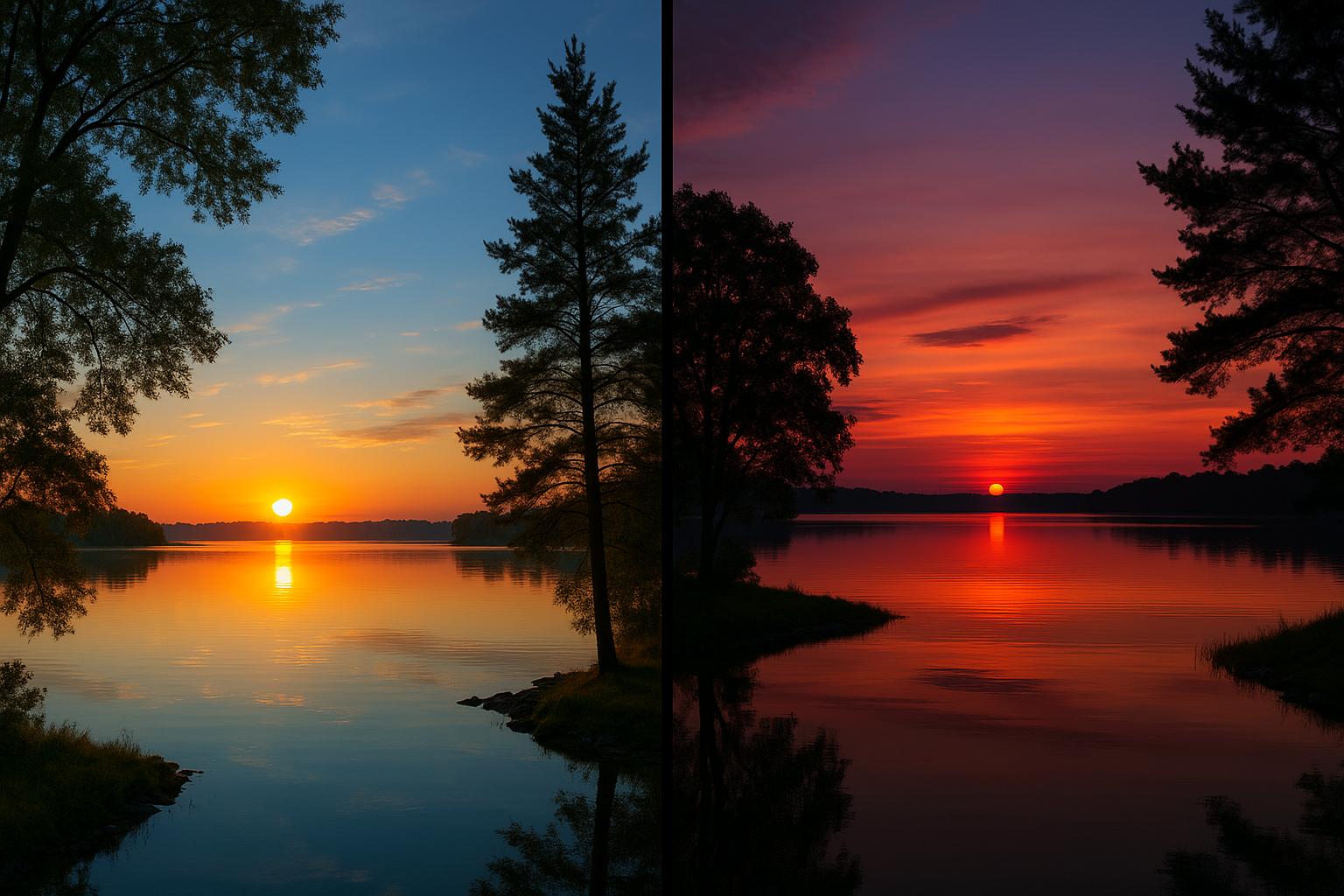
Moreover, water bodies such as lakes act as tranquil mirrors, often enhancing the visual impact by reflecting and amplifying the event’s colors. The situation of the observer—such as being on a coastline, a plain, or a mountainous region—can drastically alter the sunrise or sunset experience, sometimes offering uninterrupted 360-degree views that enhance the panoramic beauty of the moment.
The Unique Appeal of Lakeside Views
Beyond their natural scientific allure, sunrises and sunsets viewed lakeside present a special charm. The presence of water contributes to this unique backdrop, behaving as a natural mirror that reflects the vibrant palette of the sky. During these times, the stillness of a lake—especially at dawn or dusk—offers a pristine reflection of the sky’s colors, creating images that seem almost symmetrical and certainly serene.
Popular Locations for Lakeside Viewing
Around the world, numerous lakes are acclaimed for their breathtaking sunrise and sunset vistas. Sites such as Lake Louise in Canada and Lake Tahoe in the United States are favored spots due to their picturesque settings. These locations provide generous open horizons and are typically enveloped by nature—be it mountains, forests, or sprawling fields—that further elevate their aesthetic appeal.
The striking aspect of these locations is not just their natural beauty but also their ability to draw photographers, artists, and nature lovers who seek the definitive moment when light and landscape come together harmoniously. The landscapes surrounding these lakes are central to this allure, as mountain silhouettes or the adjacent thick forests provide contrasting backdrops that enhance the drama and beauty of dusk and dawn.
Photography Tips for Capturing the Moment
For those seeking to immortalize the beauty of sunrises and sunsets, photography becomes an art of patience and precision. Employing a tripod ensures stability, which is crucial during low-light conditions typical of these times. Adjusting the camera exposure and utilizing filters like polarizers can significantly enhance the color saturation and detail captured in photographs. Arriving beforehand or lingering after the peak moment allows photographers to capture the transition of light—often the most dynamic and visually rewarding aspects of these natural marvels, revealing gradual changes in hue and tone that a casual observer might miss.
Benefits of Watching Sunrises and Sunsets
Observing sunrises and sunsets offers a multitude of benefits, transcending beyond their aesthetic charm. These moments present rare opportunities for introspection and relaxation, delineating the start and end of a day with grace and tranquility. Engaging in this daily ritual allows people to pause amidst a bustling world, fostering mindfulness and encouraging a contemplative mindset.
The Connection to Mental Well-being
There’s a compelling link between observing natural beauty and improved mental health. Studies suggest engaging with nature, such as witnessing sunrises and sunsets, can contribute positively to mental well-being. This interaction enables individuals to momentarily escape the stresses of daily life and immerse themselves in the simplistic beauty of nature. This practice not only enhances mood but also offers stress reduction and a rejuvenated spirit. Those interested in understanding this relationship further can explore research findings and scholarly articles, such as this piece from Psychology Today, which delve into the beneficial effects nature can have on psychology and overall well-being.
To conclude, observing sunrises and sunsets—especially over expansive, reflective bodies of water like lakes—yields a blend of scientific, aesthetic, and mental benefits. Whether one is a seasoned photographer aiming to capture the perfect shot, a nature enthusiast eager to appreciate panoramic vistas, or someone seeking mindfulness and serenity, these daily phenomena offer a profound and enriching experience. Ultimately, they remind us of nature’s perpetual cycle and beauty, encouraging gratitude and reflection.