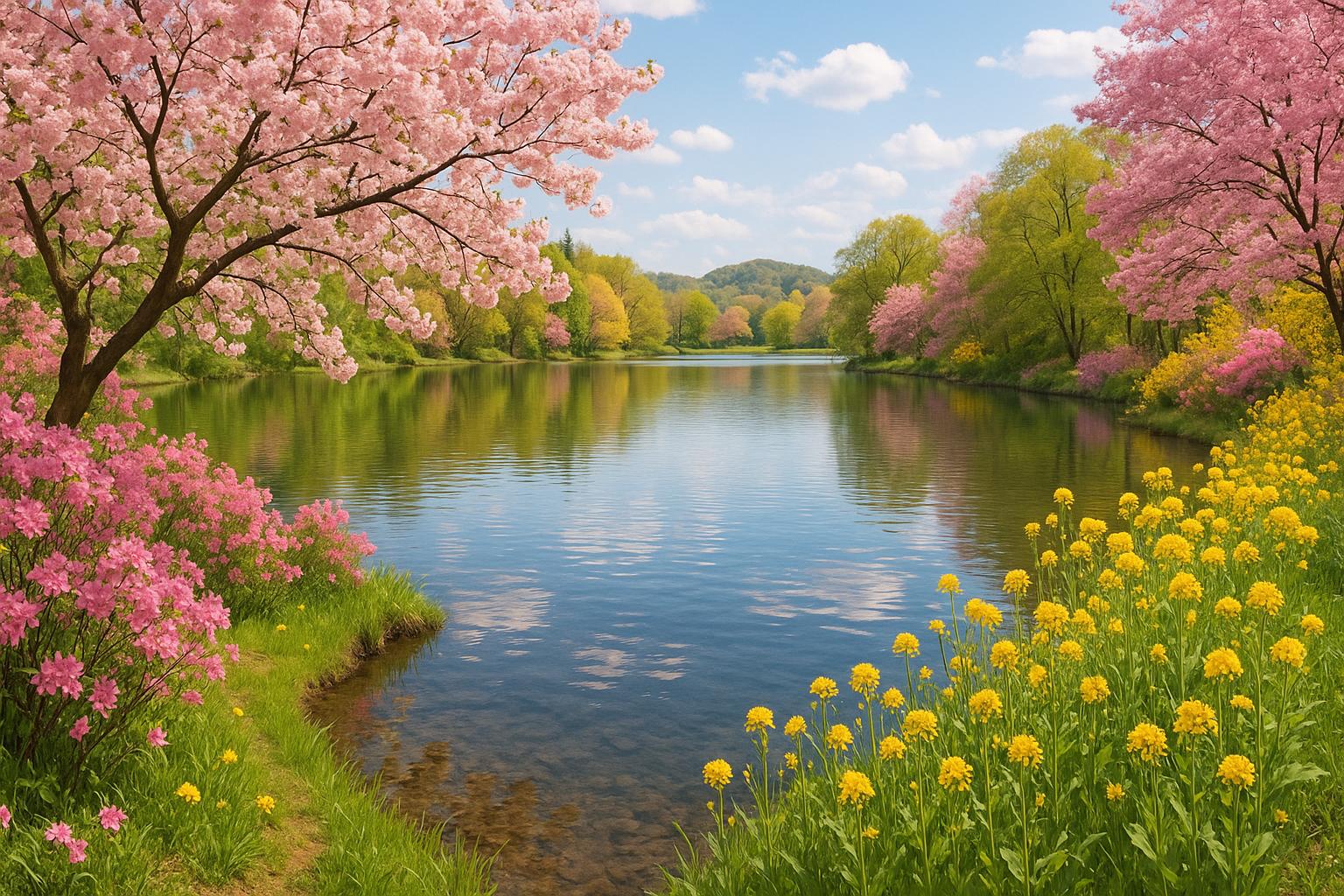
Introduction to Springtime Blooms near Lake Areas
Spring is a season known for its rejuvenating qualities, especially in regions surrounding lakes. The combination of water and seasonal warmth fosters a diverse array of plant life, resulting in breathtaking displays of blooms. These environments not only offer a visual feast but also support intricate ecosystems.
Conditions Favorable for Plant Growth
Lakes provide a distinctive microclimate that is conducive to the growth of spring blooms. The presence of water helps moderate temperature variations, ensuring a stable environment for plant life. Additionally, the ample moisture available from lakes enables plants to thrive without relying solely on rainfall. Several factors such as soil quality, light availability, and wind patterns contribute to the diversity and richness of plant species in these areas.
Soil Composition
The soil around lakes is typically rich in nutrients due to the deposition of organic matter and minerals carried by the lake itself. This nutrient-laden soil supports robust plant growth. Furthermore, the higher water table around lakes ensures that plant roots have easier access to moisture, aiding their development.
Temperature and Light
Lakes have a moderating effect on local temperatures, making them slightly milder compared to the surrounding areas. The reflection of sunlight off the lake’s surface enhances light availability, which is crucial for promoting photosynthesis in plants. This process is vital for their growth and blooming.
Examples of Common Spring Blooms
Various species of flora flourish around lakes during the spring months, each contributing to a vibrant tapestry of colors. Examples include wildflowers such as daisies and buttercups, which are commonly found in meadows and other sunny spots. Meanwhile, shaded areas closer to the lake might host varieties of ferns and trilliums.
Wildflowers
Wildflowers are a significant component of the lake area’s landscape. Species such as the Ranunculus genus, also known as buttercups, often dominate open, sunny areas. Their persistent blooms provide aesthetic appeal and serve as essential pollinators for insects.
Shrubs and Larger Plants
In addition to wildflowers, larger plants and shrubs like Rhododendrons are frequently observed near lakes. These plants typically prefer the slightly acidic and well-drained soils found in such environments and thrive beneath the filtered sunlight from surrounding woodland.
Ecosystem Benefits
Beyond enhancing the beauty of lake environments, springtime blooms offer critical ecosystem services. Flowering plants provide essential food resources for an array of wildlife, including insects, birds, and small mammals. As these plants attract pollinators such as bees and butterflies, they play a pivotal role in the reproductive cycles of numerous plant species, ensuring ongoing biodiversity.
Pollinators
Pollinators are crucial for the reproduction of flowering plants. The blooms around lakes are particularly appealing to bees, butterflies, and other pollinating insects due to the diverse array of flowers and their rich nectar.
Bird Habitats
Many bird species derive benefits from the springtime blooms, which provide food and habitat. The dense foliage offers shelter and nesting sites, enhancing biodiversity within the lake’s ecosystem. Such habitats are vital for the thriving populations of bird species that rely on these environments for survival and reproduction.
For those interested in learning more about the flora surrounding lakes during spring, numerous resources are available online. Consider exploring botanical websites or local conservation sites for detailed insights. A highly recommended resource is the Botanical Society of the British Isles, an excellent source for plant identification and understanding bloom cycles around freshwater bodies.