This article explains how investors should think about exposure to UK aquaculture, what instruments deliver that exposure, and which variables actually move prices. For anyone with basic market knowledge the key point is simple: most investable UK aquaculture risk sits in Scottish salmon, but the route to that exposure is often through Nordic listed equities or UK-listed supply chain names. The rest of this piece separates the common exposure buckets, shows why they behave differently, and gives a practical checklist for trading or longer term allocation.
What “UK aquaculture” means for an investor
When a portfolio manager says “buy UK aquaculture,” they are usually choosing one of three exposure types, each with different return drivers and headline sensitivity.
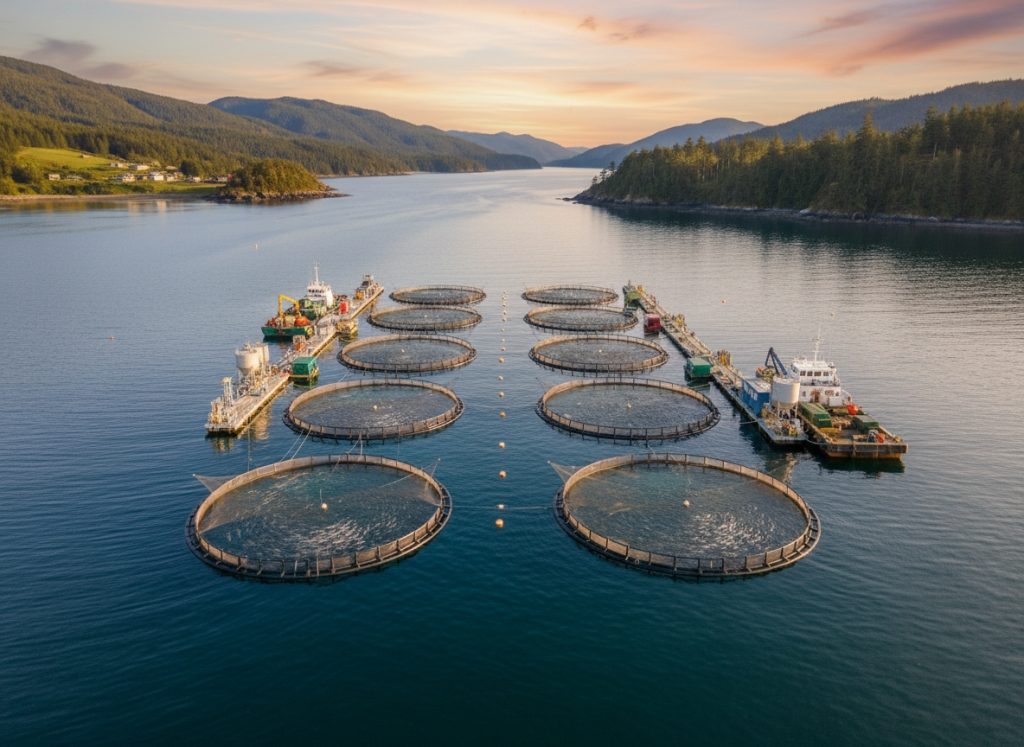
Operators: these are the producers. Their P&L comes from volumes harvested, realised fish prices, feed and treatment costs, and biological outcomes. In practice this is predominantly Atlantic salmon farming in Scotland.
Supply chain: companies that sell inputs and services to farmers. Examples include feed suppliers, vaccine and treatment providers, genetics businesses, and equipment and service providers. These names often have more diversified customers and can be less volatile on a single farm incident.
Projects and controlled environment: land based farms and recirculating aquaculture systems (RAS) are usually accessed via projects and specialist funds. These positions look more like infrastructure or private equity bets: long lead times, permitting risk, capex and utility cost sensitivity.
These are all “aquaculture exposure” but they trade like different asset classes. Operators are cyclic and biological risk concentrated. Supply chain names can be countercyclical to bad biology. Projects behave like development assets whose returns are dominated by execution and energy costs.
The core profit pool: Scottish Atlantic salmon
If you want to model UK aquaculture, start here. Atlantic salmon from Scotland is the single biggest source of meaningful, recurring cash flows.
Production and concentration
Scottish farmed Atlantic salmon production is large enough to matter in global markets. Official sector surveys put Scotland’s 2024 Atlantic salmon output at 192,000 tonnes, a meaningful increase year on year. That concentration is important: much of what the market calls “UK aquaculture news” is really Scottish salmon farming news because the commodity and the operating base are concentrated.
Why concentration matters for returns
A listed company reporting Scottish farming operations will see earnings driven by Scottish biology and regulation. That makes regional events — temperature spikes, disease outbreaks, sea lice challenges, or regulatory constraints on biomass — direct inputs to quarterly and annual variance. Harvest timing decisions also create headline volatility; companies often move volumes between quarters for operational or price reasons and that can look like an earnings surprise.
Global price formation; local cost base
Scottish salmon participates in global price formation for farmed salmon, but costs are local. Feed price, labour, logistics and regional compliance or treatment regimes all sit in sterling or local currencies and can compress margins even when the spot price is strong. Traders need to separate price exposure from site level cost and biological exposure.
Regulation, welfare scrutiny and the visibility problem
Regulation in Scotland is active and investments are not insulated from it. Environmental permissions, sea lice targets and consent frameworks constrain site capacity and add direct compliance costs. Public and political scrutiny is also higher than a few years ago. Data released through freedom of information channels revealed over 35 million unexpected salmon deaths reported between January 2023 and October 2025, and limited unannounced inspections were noted in media reporting. Whether or not that framing is complete, markets price the policy and reputational consequences: retailer pressure, new certification requirements, or mandated capital upgrades can all compress returns.
Operators: listed routes to direct exposure
If you want direct, liquid exposure to Scottish salmon farming, the most efficient route is often not London but Nordic markets. The major farming groups that operate in Scotland list in Norway, the Faroe Islands, or elsewhere. Below we cover the typical listed routes and the practical points an investor should watch.
Visit Investing.co.uk to find brokers that give you access to the stocks mentioned below.
Mowi
Mowi is the largest global salmon farmer with a major Scottish farming and processing footprint. For investors, Mowi offers near pure exposure to core farming economics combined with scale advantages in processing and logistics.
What to watch in Mowi
- Scottish site level biology: temperature related stress, gill health, and local mortality events.
- Harvest cadence: quarter shifting of volumes is common and can cause surprise swings.
- Regulatory and reputational headlines that affect Scottish operations specifically.
- Feed and input costs that sit outside salmon markets and feed into gross margin.
Mowi behaves like a global salmon operator where Scottish performance can be a material line item for quarterly variance.
Bakkafrost
Bakkafrost owns and operates significant Scottish interests after acquiring The Scottish Salmon Company. For investors Bakkafrost is a group with mixed geographies where Scotland is a material but not sole driver.
What to watch in Bakkafrost
- Integration and operating performance of Scottish assets relative to the group.
- How Scottish regulatory constraints, such as local lice limits or consenting delays, affect output.
- Contribution of Scotland to group margins compared with operations in the Faroes and elsewhere.
Bakkafrost can amplify or dilute Scottish shocks depending on group scale and regional performance.
SalMar and Lerøy (via Scottish Sea Farms)
A significant share of Scottish production is controlled by a joint venture branded Scottish Sea Farms. That JV is owned by SalMar and Lerøy, which means any investor in those Norwegian houses gains indirect Scottish exposure.
What to watch in SalMar and Lerøy exposures
- The diluted nature of exposure. Scottish events will affect consolidated results but may be a smaller share of headline numbers.
- Group level cycles and other geographies. Diversification reduces volatility from a Scottish-only shock but also masks local upside.
How operators’ earnings move — more than price
Operator earnings do not move in lockstep with a simple fish price model. Biological performance — growth, survival, gill health — directly affects harvestable biomass. Sea lice control and other treatment costs can spike. Feed conversion ratios and feed price moves change gross margins. Management choices about harvest timing will shift volumes between reporting periods and create guidance surprises. For short term trading, many of the largest guidance changes seen in operator results follow harvest timing and site level biology rather than a pure demand shock.
Regulatory mechanics and how they feed valuation
Regulatory actors set the operational boundary. In Scotland, environmental and consenting frameworks allocate capacity, impose monitoring, and define sea lice approaches. Where consenting is tightened or new monitoring is enforced, companies face slower capacity growth and higher near term operating costs. Investors need to model regulatory risk quantitatively: lower permitted biomass reduces long run volume potential while new monitoring or treatment requirements raise unit costs.
UK-listed supply chain exposure
If you prefer sterling denominated equity and want to avoid direct biology exposure, the supply chain is the more obvious public market route. UK-listed suppliers are often smaller, more focused on health or nutrition, and trade on customer cycles rather than site level biology.
Benchmark Holdings
Benchmark is a UK-listed company historically active across genetics, health and nutrition. In late 2024 it completed the sale of its genetics business to a large Danish investor for up to £260 million, a transaction that materially changed the revenue and margin mix.
Why supply chain names behave differently
Supply chain revenues can be less correlated with harvest volumes. Farmers may cut capital projects first but maintain spending on treatments and survival related inputs. In some cases worse biological years increase demand for health treatments and monitoring. That makes certain product lines countercyclical to farmer earnings. The downside is product specific risk. If a treatment loses approval or a product’s efficacy is questioned, revenues can fall quickly.
What to watch in supply chain investments
- Customer concentration: a few large farmers can represent a large share of revenues.
- Regulatory approvals and withdrawal periods for products. Approvals can be binary drivers.
- Product efficacy and the threat of obsolescence. A new parasite or resistance development can wipe out demand for an incumbent solution.
- Currency and contract terms: many supply chain contracts are priced in foreign currencies or reference global feed ingredient prices.
For UK investors seeking GBP denominated exposure with aquaculture linkage, supply chain names are the simplest public market route but they come with their own concentrated technology and customer risks.
Land based aquaculture and RAS projects
Land based farming and recirculating aquaculture systems promise a cleaner biological profile: better biosecurity, lower sea lice risk and closer proximity to markets. In practice they are a different kind of investment: execution and utility economics dominate returns.
Project economics and the real margin lever
RAS technology reduces exposure to open sea events, but it increases exposure to power, heat and water costs. For many projects the largest single margin swing is energy. Developers assume certain energy prices and availability; if these prove optimistic, unit costs rise materially.
How investors usually access the theme
Most public investors reach land based aquaculture via project finance, listed funds or vehicles that own or lend to projects. For example, a UK listed environmental assets fund announced an investment of up to about £40 million into a controlled environment aquaculture project alongside other managers and a specialist operator. These structures can provide exposure but the asset behaves like an infrastructure or private equity stake: long lock ups, phased returns, and strong sensitivity to permitting and offtake.
What to read in the fine print
- Permitting and water use rights. These are often the slowest risk to resolve and the most likely to change timelines.
- Utility contracts and indexing. Prefer projects with fixed or hedged power costs.
- Technology vendor warranties and performance guarantees. Tech suppliers matter more than marketing claims.
- Of take agreements and pricing assumptions. Land based farms sell at a premium only if buyers accept that premium at scale.
If you intend to trade the theme, treat RAS as a basket of execution, technology and energy plays rather than a single biological hedge.
What actually moves UK aquaculture exposure — a practical checklist
Biology beats spreadsheets
Model a bad year and a recovery year. Mortality events can cut reported production by tens of percent in affected regions and create outsized headline impact.
Regulation can cap growth
Regulatory frameworks set permitted biomass and monitoring. For operators this is a supply side constraint not a background variable. When consent regimes tighten, growth projections are the first thing to reprice.
Prices are global; costs are local
A favourable spot price does not guarantee margin improvement if local costs, feed conversion or treatment spend increase. Separate price exposure from operational exposure in your model.
Public scrutiny has become a valuation variable
Retailer pressure and public enquiries can force traceability, certification or capex. Recent reporting on mortality and inspections has increased the chance that welfare considerations will feed into policy and sourcing requirements.
Currency matters
Many listed vehicles that own UK assets are quoted in NOK or DKK. Your total return will combine operating performance and FX moves. If you require sterling purity, prefer UK listed supply chain names or funds, accepting their different risk profiles.
Treatment demand can be counterintuitive
Worse farming conditions often raise demand for treatments and monitoring. That makes some supply chain lines anti cyclical in practice. But product concentration and approval risk can make these volatile.
Project economics are not marketing
For RAS, the largest variances come from power and technology performance. Read permit schedules, utility assumptions and vendor warranties before relying on optimistic IRRs.
Closing: how to pick a route depending on objective
If you want direct exposure to Scottish salmon producers and you accept currency and regional operating complexity, the most liquid route is Nordic listed farmers. Expect biology and regulatory headlines to drive short term moves and global price to dominate medium term returns.
If you want UK listed equities and cashflow linked to aquaculture, supply chain names give GBP exposure but bring product and customer concentration risk.
If you prefer a thematic, project style allocation, RAS and controlled environment projects exist, but treat them like development and infrastructure plays. Focus diligence on permitting, energy economics and execution risk rather than marketing claims.
Make models stress test biological outcomes and regulatory ceilings. For traders this is not a single-factor play — timing, site level health and regulatory headlines are the dominant short term drivers. For longer term investors, separate price, biology and capex/regulatory assumptions and make sure your entry reflects which of those you are buying.