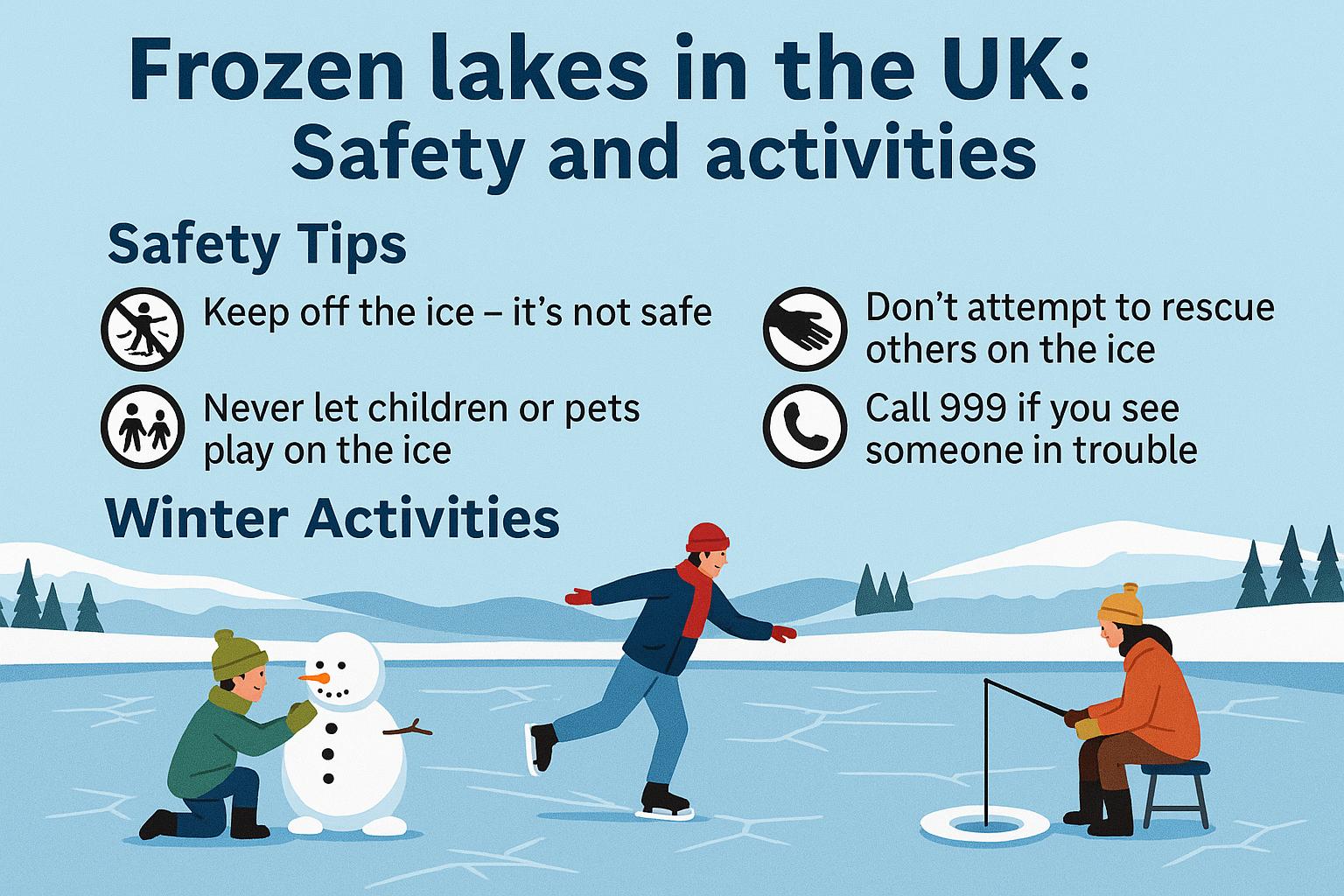
Frozen Lakes in the UK: Safety and Activities
During the colder months, particularly in the northern parts of the UK, lakes and ponds can often freeze. These frozen bodies of water offer a unique opportunity for winter activities. Engaging with these natural wonders can be delightful, but it requires a certain understanding and a cautious approach to ensure safety.
Understanding Frozen Lakes
Across the UK, lakes and ponds may freeze when temperatures drop for extended periods. However, the thickness and safety of the ice can vary greatly. Factors such as weather conditions, the specific location of the water body, and the time of year significantly influence the ice’s stability. Understanding that ice thickness is not consistent and can change rapidly is vital for safe enjoyment.
Ice Safety Guidelines
Safety is paramount when considering activities on a frozen lake. Here are some essential guidelines to keep in mind:
Check Ice Thickness: For any activity, including walking or skating on ice, a minimum thickness of 15 cm is generally recommended. It’s important not to assume ice thickness without a proper measurement. In some areas, ice thickness updates are available online through local council websites or the Environment Agency.
Visibility: Strong ice is usually clear and blue in appearance. In contrast, avoid ice that appears opaque, grey, or slushy, as these can signal weakness. When uncertain about the ice’s condition, it is always best to stay off it.
Public Advice: Always adhere to advice from local councils or the government concerning ice safety. The Environment Agency often provides updates regarding local ice conditions and safety measures.
Emergency Preparedness
In the unfortunate event of falling through ice, it is crucial to remain composed and follow these steps:
– Keep your clothing on. Contrary to intuition, clothing can trap air and provide buoyancy.
– If you fall into the water, try to position your body horizontally and swim towards the edge where the ice is broken.
– Use your legs to kick while pulling yourself onto the solid ice and, once on the surface, roll away from the edge to evenly distribute your weight.
Rescuers are advised against venturing onto the ice to assist. Instead, it is safer to utilize long objects like a stick or a ski pole or to throw a rope or flotation device to the person in distress.
Recreational Activities on Frozen Lakes
When the ice’s safety is confirmed, frozen lakes can be wonderful locales for a variety of activities:
Ice Skating
Ice skating on natural ponds and lakes remains a popular pastime. Before lacing up your skates, verify that the ice meets the necessary thickness for safety. Be mindful of any posted warnings or advisory signs, and enjoy the winter scenery as you glide. In some UK communities, public skating events may be organized.
Ice Fishing
Although ice fishing is not as widespread in the UK as in countries with more severe winters, the activity can be enjoyed where conditions are suitable. Participants should take all necessary precautions, ensuring they wear appropriate clothing for warmth and utilize safety equipment.
Wildlife Observation
While not an activity directly on the ice, frozen environments create exceptional opportunities for observing wildlife. The absence of foliage on trees makes it easier to spot birds and other animals, turning a day out into a rewarding session of wildlife photography and observation.
Final Thoughts
In conclusion, while frozen lakes in the UK provide thrilling opportunities for winter recreation, it is critical to approach these activities without compromising safety. Always confirm ice conditions with reliable local sources, follow established safety guidelines, and when in doubt, choose organized and supervised venues. For further information on outdoor safety during the winter, local governmental websites and information centers often have valuable resources available.