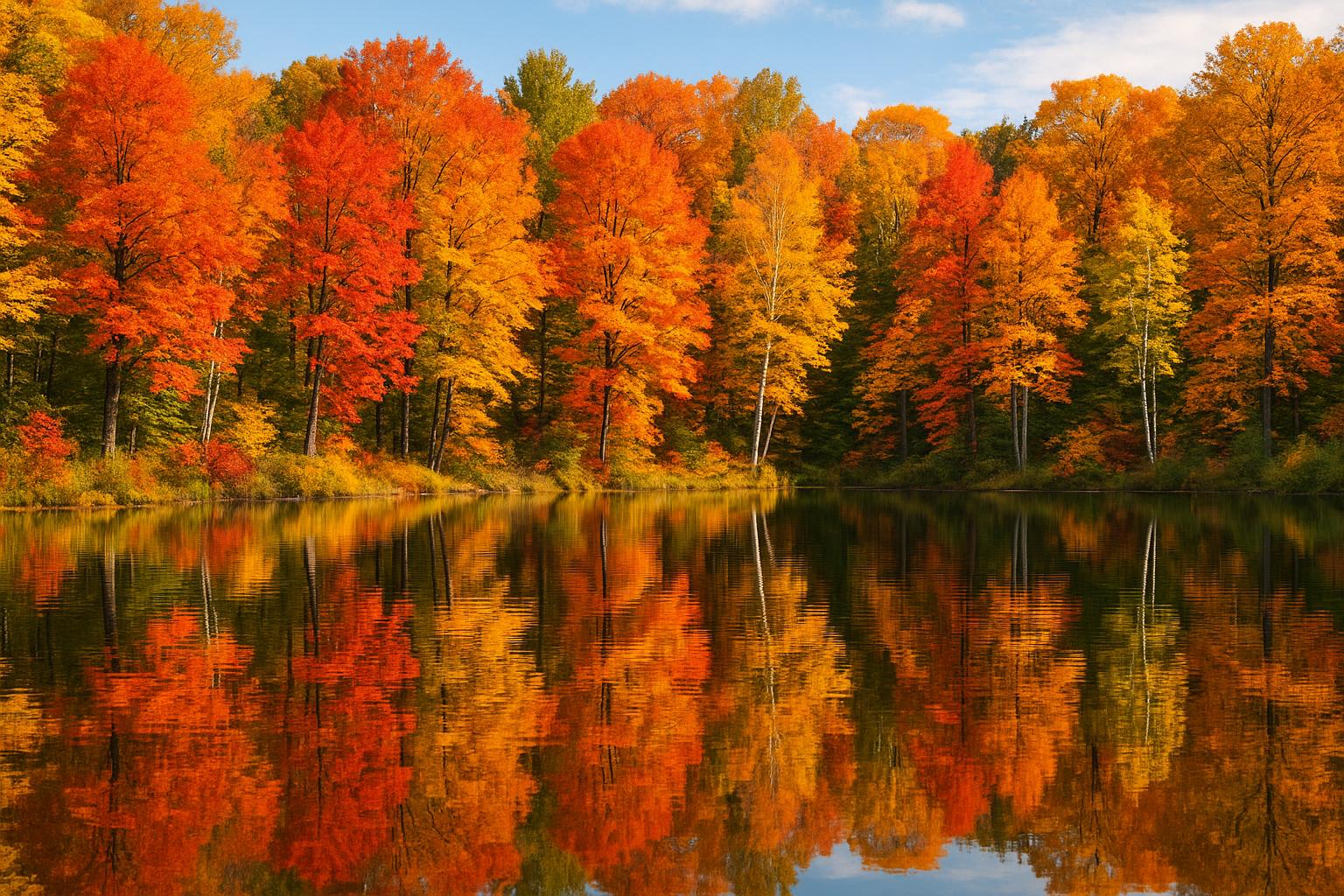
Understanding Autumn Foliage Reflections on Lake Waters
The phenomenon of autumn foliage reflections on lake waters is a captivating natural occurrence that attracts nature enthusiasts and photographers alike. This effect is most prominently observed during the fall season, predominantly from late September through November in the Northern Hemisphere.
Scientific Explanation
The vivid colors of autumn foliage are the result of biochemical processes in the leaves of deciduous trees. As daylight hours decrease, chlorophyll production slows, revealing the underlying hues of carotenoids (yellows and oranges) and anthocyanins (reds and purples). When these brightly colored leaves mass near bodies of water, the stillness of the water surface acts like a natural mirror, perfectly reflecting the complex tapestry of hues.
Conditions for Optimal Reflection
Several environmental conditions enhance the clarity and vibrance of these reflections:
- Calm Weather: Calm, windless days ensure a smooth water surface which is critical for clear reflections.
- Angle of Sunlight: Low angled sunlight during the early morning or late afternoon can intensify colors and improve reflection quality.
- Clean Water: Lakes with clear, pollutant-free water provide the best mirrors for reflecting autumn foliage.
Best Locations for Viewing
Around the world, there are numerous locations renowned for stunning autumn foliage and lake reflections. Some notable places include:
- Acadia National Park in the United States
- Japanese Gardens in Japan
- Lake District National Park in England
Photography Tips
Photographing autumn reflections can be rewarding with the right techniques:
- Use a polarizing filter to reduce glare and enhance color saturation.
- Opt for a lower ISO setting to maintain image clarity.
- Experiment with different exposure times to capture diverse moods and textures.
For more comprehensive guidance on photographing fall foliage, visit National Geographic’s Photography Tips.
In summary, the interplay between autumn foliage and lake waters creates a captivating sight steeped both in natural beauty and scientific interest. Whether you’re an avid photographer or simply an admirer of nature, witnessing this seasonal spectacle can be a truly enriching experience.
The Dynamics of Autumn Changes
Autumn is not just about the beauty of colors that nature showcases; it’s an intricate interplay between plant biology and environmental conditions. The transformation of leaves from green to vibrant colors is due to the cessation of chlorophyll production as trees prepare for winter dormancy, a mechanism that conserves water and energy. Chlorophyll’s decline unveils other pigments like carotenoids and anthocyanins.
Environmental Influences
Various environmental factors can influence the intensity of autumn colors. Bright, sunny days and cool, crisp nights contribute significantly to the development of brighter reds in leaves. The warmth of daytime allows for more sugar production in leaves, and cool nights trap these sugars, aiding in the synthesis of anthocyanins.
Impact of Climate Change
The changing climate can impact the timing and intensity of autumn foliage. Warmer temperatures and changing precipitation patterns may result in the shift of the peak foliage period. Trees could experience stress due to droughts or excessive rainfall, potentially affecting their health and the vibrancy of foliage colors.
Cultural Significance
Across different cultures, autumn leaf viewing holds a significant place. In countries like Japan, the tradition of Momijigari, or autumn leaf hunting, is a deep-seated cultural activity where people journey to scenic spots to appreciate the seasonal colors. Similarly, in the United States, ‘leaf peeping’ is a popular tourism draw, especially in regions like New England.
Ecological Impacts of Foliage
Autumn foliage not only provides visual appeal but also plays a role in ecological balance. Leaves that fall contribute to soil health as they decompose, enriching it with nutrients that support new plant life.
An understanding of these dynamics not only heightens appreciation for autumn landscapes but also underscores the complexity and interconnectedness of ecosystems. Maintaining the health and stability of these ecosystems ensures continued enjoyment of their beauty and functionality for future generations.
For further exploration into the impacts of climate change on autumn foliage, consider visiting the Climate.gov website.