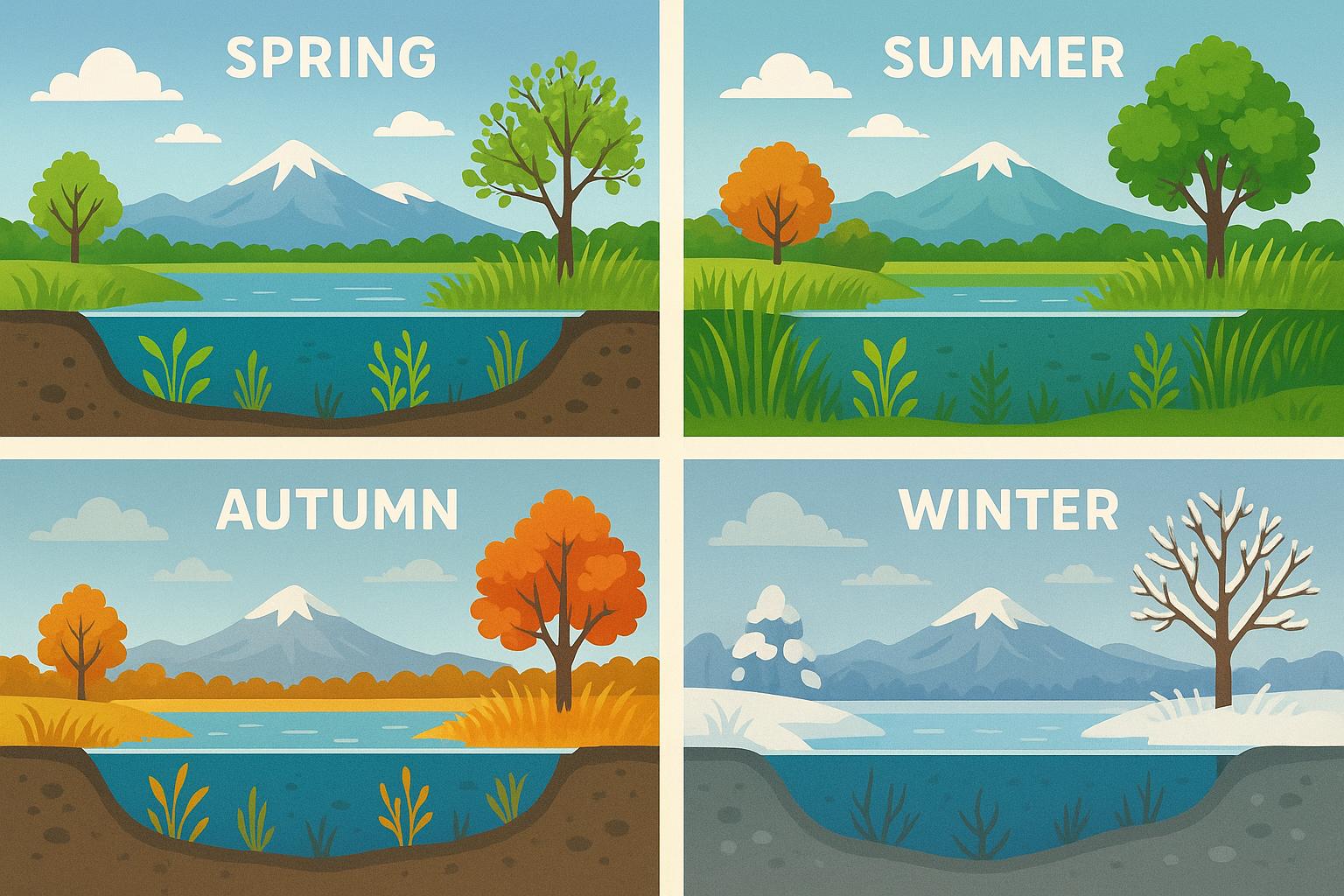
Understanding Seasonal Changes in Lake Ecosystems
Lakes are complex and dynamic ecosystems subject to the ebbs and flows of seasonal changes. These transformations are primarily driven by shifts in temperature, the availability of light, and the natural cycle of biological activity. Understanding these seasonal variations is crucial for the effective management of lake resources and for the preservation of their delicate biodiversity.
Spring Turnover
One of the most crucial seasonal changes in temperate lake environments is known as the spring turnover. As winter recedes, the melting of ice allows the water on the surface to become exposed to increasing atmospheric temperatures. The surface water, as it warms, reaches a critical temperature of 4°C, a point at which water is most dense. This dense surface water sinks and displaces the cooler water below, setting off a mixing process that equalizes temperatures and redistributes oxygen and nutrients throughout the lake. This turnover is fundamental for restoring lake ecosystems after the stagnation of winter, invigorating biological activity and setting the stage for the productivity of warmer months.
Summer Stratification
As spring gives way to summer, lakes in temperate regions often undergo a process called thermal stratification. The heat of the summer sun warms the top layer of water, which is less dense and hence, it forms an upper layer known as the epilimnion. Beneath this warm, buoyant strip lies the hypolimnion, a layer of cooler, denser water. The boundary between these layers is referred to as the thermocline. This stratification has significant impacts on the lake’s ecology, as it effectively creates two separate thermal ecosystems. The physical separation impedes the natural mixing of nutrients and can lead to oxygen gradient problems, which is especially critical for organisms residing in deeper waters.
Impact on Aquatic Life
The stratification that characterizes lakes during the summer months leads to diverse consequences for aquatic life, with organisms adapting to different conditions within the separated thermal layers. Species residing near the surface benefit from the warm, oxygen-enriched waters of the epilimnion, allowing them to thrive. Conversely, species that inhabit the deeper water in the hypolimnion must contend with the challenge of low oxygen levels, due to the reduced mixing of water. This can change behaviors, alter feeding patterns, affect growth rates, and even influence the reproductive success of species across the lake.
Fall Turnover
When the summer ends and autumn approaches, cooling temperatures revive the cycle of water mixing in lakes, known as the fall turnover. As temperatures drop, the warm epilimnion cools and becomes denser, allowing it to mix efficiently with the hypolimnion. This mixing is similar to the spring turnover, effectively re-oxygenating the entire depth of the lake, redistributing nutrients, and resetting conditions for various organisms. This turnover is critically important to maintaining the lake’s ecosystem health as winter approaches, ensuring that lake environments sustain their biodiversity and remain viable until the onset of colder conditions.
Winter Conditions
In colder climates, as temperatures continue to drop, lakes can become covered with ice, creating a unique set of winter conditions. Beneath this layer, life persists albeit in a different state. The formation of ice plays an insulating role, keeping the water below from freezing solid while maintaining temperatures that can sustain fish and other aquatic organisms. However, the presence of ice also limits penetration of sunlight into the water. This impacts photosynthetic activities, which might lead to a gradual reduction in oxygen levels as photosynthesis is compromised.
Challenges in Winter
One of the significant issues faced during winter is winterkill, a situation where oxygen levels can deplete under prolonged ice cover. The absence of adequate oxygen can induce stress among aquatic life or even result in mortality, especially in cases where snow cover on top of the ice further limits light penetration. Various proactive management techniques, including aeration, may be employed to counteract these potential hazards, helping to maintain adequate oxygen levels for aquatic organisms through the winter months.
The Role of Human Activities
Human activities inevitably influence the natural seasonal changes in lake ecosystems. Pollution, climate change, and land use changes can significantly impact the natural processes of turnover and stratification. Such alterations can disrupt the delicate balance within lake ecosystems. Understanding these human-induced changes helps in crafting strategies that can mitigate their adverse effects and enhance efforts towards sustainable management of these ecosystems. Efforts to understand and influence these human impacts on aquatic ecosystems can benefit from the perspectives offered by agencies such as the Environmental Protection Agency.
Conclusion
Seasonal changes are fundamental drivers that shape the nature of lake ecosystems, influencing their chemical, physical, and biological processes. Recognizing and understanding these patterns are key in the conservation and management of lakes, ensuring they continue to thrive as vibrantly interconnected parts of our natural environment. By appreciating these seasonal dynamics, we can support the health and resilience of lake ecosystems, enabling them to endure and flourish in the face of both natural and human challenges.