Introduction to Reservoirs
Reservoirs represent a crucial aspect of modern infrastructure by creating artificial lakes through the construction of dams across rivers. These structures serve a multitude of purposes that go beyond the mere impoundment of water. Primarily, they are utilized for water supply, furnishing communities with access to water for household and industrial use. Furthermore, they play a significant role in the generation of hydroelectric power, offering a renewable source of energy essential for reducing dependence on fossil fuels. Beyond human use, these artificial bodies of water help in effectively controlling floods, mitigating the damage caused by excessive rainfall by managing river flow during periods of high precipitation. Additionally, reservoirs offer recreational opportunities, including boating, fishing, and other water-related activities, which can promote community engagement and contribute to local economies.
Nonetheless, despite the plethora of benefits they provide, reservoirs come with a cost—particularly, the environmental challenges they pose. The creation of these water bodies results in significant alterations to the natural landscape and can have profound impacts on the local ecosystems.
Environmental Impacts of Reservoir Construction
The construction of reservoirs is a complex process, often entailing the inundation of extensive land areas. This massive undertaking inevitably leads to a spectrum of environmental repercussions. Such impacts span from changes in the local habitats to influences on water quality and repercussions for the wildlife residing within and around the inundated areas.
Habitat Alteration
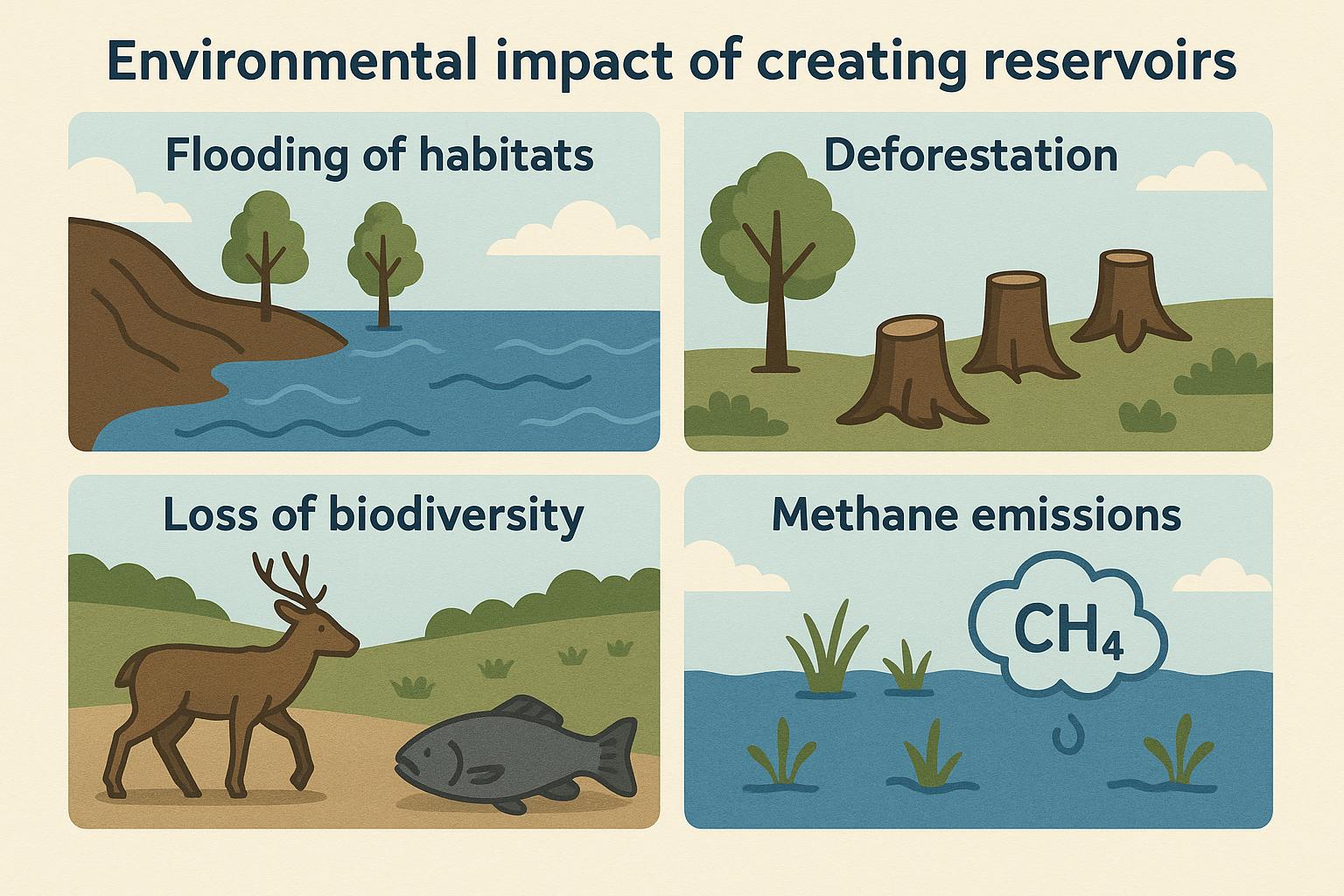
One of the most immediate effects of reservoir construction is the transformation of the natural landscape. As areas are flooded, ecosystems that once thrived are significantly altered. Forests, fields, and wetlands are submerged, resulting in the loss of critical terrestrial habitats. This process often leads to a decline in biodiversity, as many plant and animal species struggle to adapt to the rapidly changing environment or face outright loss of habitat. The displacement of species occurs because certain species cannot survive in conditions altered by the new aquatic environment.
Moreover, the requisite change in land use often brings about soil erosion and degradation in surrounding areas. The removal of vegetative cover crucial for stabilizing the soil exacerbates these effects, leading to increased sedimentation in remaining water bodies. Such sedimentation can deteriorate water quality and affect aquatic life dependent on clearer waters for survival.
Changes in Water Quality
The advent of a reservoir often disrupts the natural flow of rivers, directly influencing water quality. When organic matter begins to decompose in newly inundated areas, it releases large quantities of nutrients. Simultaneously, this process elevates levels of carbon dioxide and methane, both of which are potent greenhouse gases, contributing to global climate change.
Reservoirs also tend to develop water layers of different temperatures in a phenomenon known as stratification. This stratification affects oxygen levels in the water, which can be deleterious to aquatic life requiring specific oxygen conditions for survival. Additionally, the alteration in water temperature due to disrupted flow can have far-reaching effects on the life cycles of many aquatic organisms, further impacting ecological balance.
Impact on Wildlife
The influence of reservoirs extends to local wildlife populations, markedly affecting both terrestrial and aquatic species. Aquatic species, most notably fish, experience challenges due to barriers in migration created by dams. These structures often block natural river pathways essential for spawning, leading to declines in fish populations. Such reductions in fish populations also reverberate through the food chain, affecting species reliant on fish as a food source.
On land, wildlife faces its own set of challenges adapting to rapid environmental changes. The rise in water levels and the overall transformation of landscapes compel some species to migrate to new areas. Others might face extinction if they are unable to relocate or adapt to new conditions, emphasizing the need for strategies that support wildlife conservation in reservoir areas.
Strategies for Mitigating Environmental Impact
To address the environmental challenges posed by reservoirs, deliberate measures can be employed to mitigate adverse effects. A widely implemented solution is the use of fish ladders or bypass systems, which facilitate the migration of aquatic species around dams, thereby supporting the continuation of their life cycles despite man-made barriers.
Furthermore, sediment management practices play a crucial role in maintaining the quality of water in reservoirs and reducing erosion impacts. This involves carefully managing the inflow of sediments into reservoirs to prevent excessive sedimentation, which can harm aquatic ecosystems.
Efforts to create ecological corridors and preserve adjoining natural habitats can also significantly contribute to the survival and prosperity of terrestrial wildlife. By ensuring there are corridors that allow species to move freely between habitats, a degree of habitat connectivity is maintained. In tandem, the restoration of vegetation in surrounding areas mitigates soil erosion, enhances habitat quality, and promotes biodiversity.
For those seeking further knowledge on sustainable practices tailored to mitigate the environmental impact of reservoirs, resources from environmental organizations such as the World Wildlife Fund and the International Union for Conservation of Nature provide valuable insights and guidance.
Conclusion
Reservoirs undoubtedly occupy a critical position in facilitating modern conveniences and addressing human needs, such as water supply, energy production, and flood control. However, the environmental implications associated with their construction and operation cannot be overlooked. It is paramount to engage in proactive strategies and adopt sustainable practices that acknowledge and curtail these adverse impacts. Through careful planning, implementation of conservation measures, and ongoing environmental management, it is feasible to forge a balance where human development proceeds hand-in-hand with ecological preservation. By prioritizing such practices, we can ensure that the benefits reservoirs provide are not offset by irreversible damage to the environments they affect.